The $16K question every fleet operator should be asking

Every fleet operator knows what $400 a week in gas feels like.
It feels like working a full day just to feed the van. It feels like watching your margins disappear at the pump. It feels like a cost you can’t control — so you stop thinking about it.
But here’s the question worth asking: what would you do with $16,000 back in your pocket every year?
What’s Happening
The math on fleet electrification has gotten hard to ignore.
A gas van running NYC routes burns through roughly $16,000-$22,000 in fuel per year. An electric van doing the same routes? About $1,800-$2,400 in electricity — especially if you’re charging overnight when rates drop to $0.10-$0.15 per kWh.
That’s not a rounding error. That’s a business model shift.
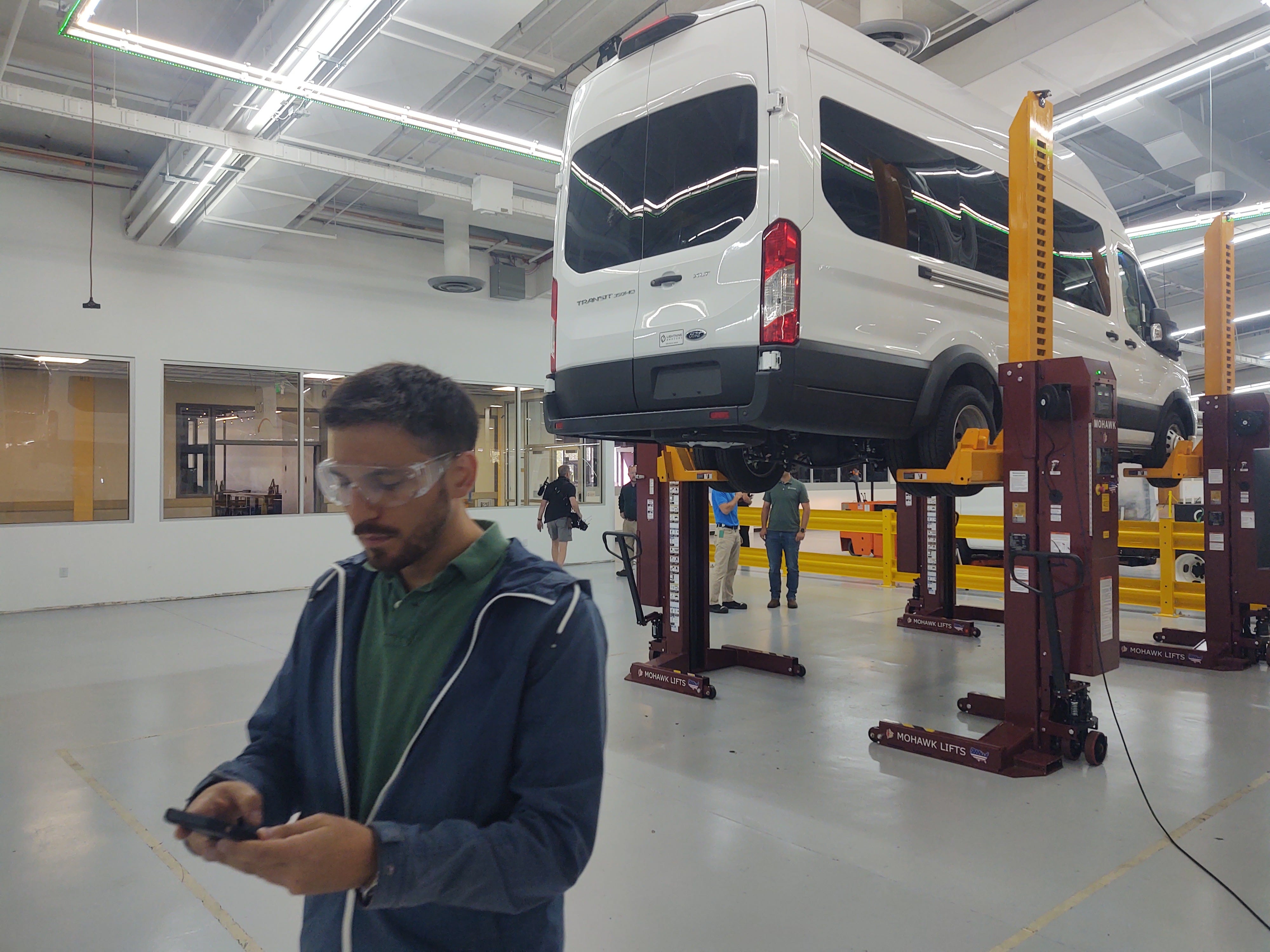
And fuel is only part of the picture. EVs cost 40% less to maintain than gas vehicles — fewer oil changes, fewer brake jobs, fewer parts that wear out. For a Ford E-Transit 350 (the same van in Dollaride’s CTAP program), maintenance runs about $3,700 over 100,000 miles vs. $7,200 for the gas version.
Add it up: fuel savings plus maintenance savings, and operators are keeping $16,000-$20,000 per van, per year. Multiply that across a 10-van fleet and you’re looking at $160,000 — every single year.
Why It Matters — For Operators
If you run a fleet, this is straightforward: lower costs, same routes, same passengers, more profit.
But there’s a layer most people miss. NYC’s congestion pricing is now live, adding a $2.50 surcharge per rideshare trip into Manhattan. Gas prices in New York are sitting at $3.54/gallon and climbing. Every cost pressure on your operations compounds — and fuel is the biggest lever you can pull.
The operators who’ve already switched aren’t just saving money. They’re buying stability. Electricity prices don’t spike the way gas does. Your monthly cost becomes predictable. And predictable costs let you plan, hire, and grow instead of just surviving.
Why It Matters — For Brokers and TNCs
Here’s where it gets interesting.
If you manage a network of drivers — whether that’s NEMT, paratransit, or for-hire vehicles — your drivers’ margins are your network’s stability.
When a driver in your network is spending $400/week on gas, that driver is one bad month away from leaving. They reject more trips. They defer maintenance. They cut corners. That’s your service quality problem.
Now flip it: a driver saving $16,000/year has breathing room. They accept more trips. They maintain their vehicle. They stay in your network longer. Lower driver costs = better driver retention = more reliable service.
Three things brokers should know:
The TLC is issuing new for-hire vehicle plates — but only for EVs. Gas vehicle capacity is capped. Electric = the only way to grow your network in NYC right now.
RFP advantage. Major NEMT brokers are already prioritizing partnerships with EV-equipped providers. If you can’t show green fleet credentials in your next contract bid, you’re losing points.
Predictable costs = competitive bids. Gas prices swing 30-40% year to year. Electricity doesn’t. Brokers who move drivers to electric can price contracts with confidence instead of padding for fuel volatility.
What’s Next
The economics are settled. The infrastructure is catching up — 100+ new NYC fast chargers coming online this year, and depot-based overnight charging is already viable for most shuttle and paratransit routes.
The remaining question isn’t if — it’s how. That’s what CTAP was built for: vehicles, charging, financing, and support bundled into one predictable monthly cost. Government-backed. No massive upfront capital.
If you’re an operator: see if your fleet qualifies for CTAP.
If you’re a broker: let’s talk about what EV-ready drivers mean for your network. Reply to this email or reach out at team@dollaride.com.
Quick Points
Light commercial fleets are “the biggest winners” in electrification economics (EY/Eurelectric research)
EV fleets had 21 fewer maintenance downtime days than gas vehicles in 2024 — that’s 21 more days your vans are earning
The NEMT market is projected to reach $16.24 billion by 2032 — and electrification is a key differentiator in winning contracts
One Thing to Think About
The $16K question isn’t really about fuel. It’s about what kind of business you’re building.
An operator burning $16,000 a year per van is running to stand still. An operator keeping that $16,000 is investing in the next van, the next driver, the next route. One model survives. The other grows.
The same logic applies to brokers: a network burning cash on fuel is fragile. A network that’s electrified is durable.
Which one are you building? Talk to us.
Until next time, The Dollaride Team
Prepared by Dollaride with Claude.